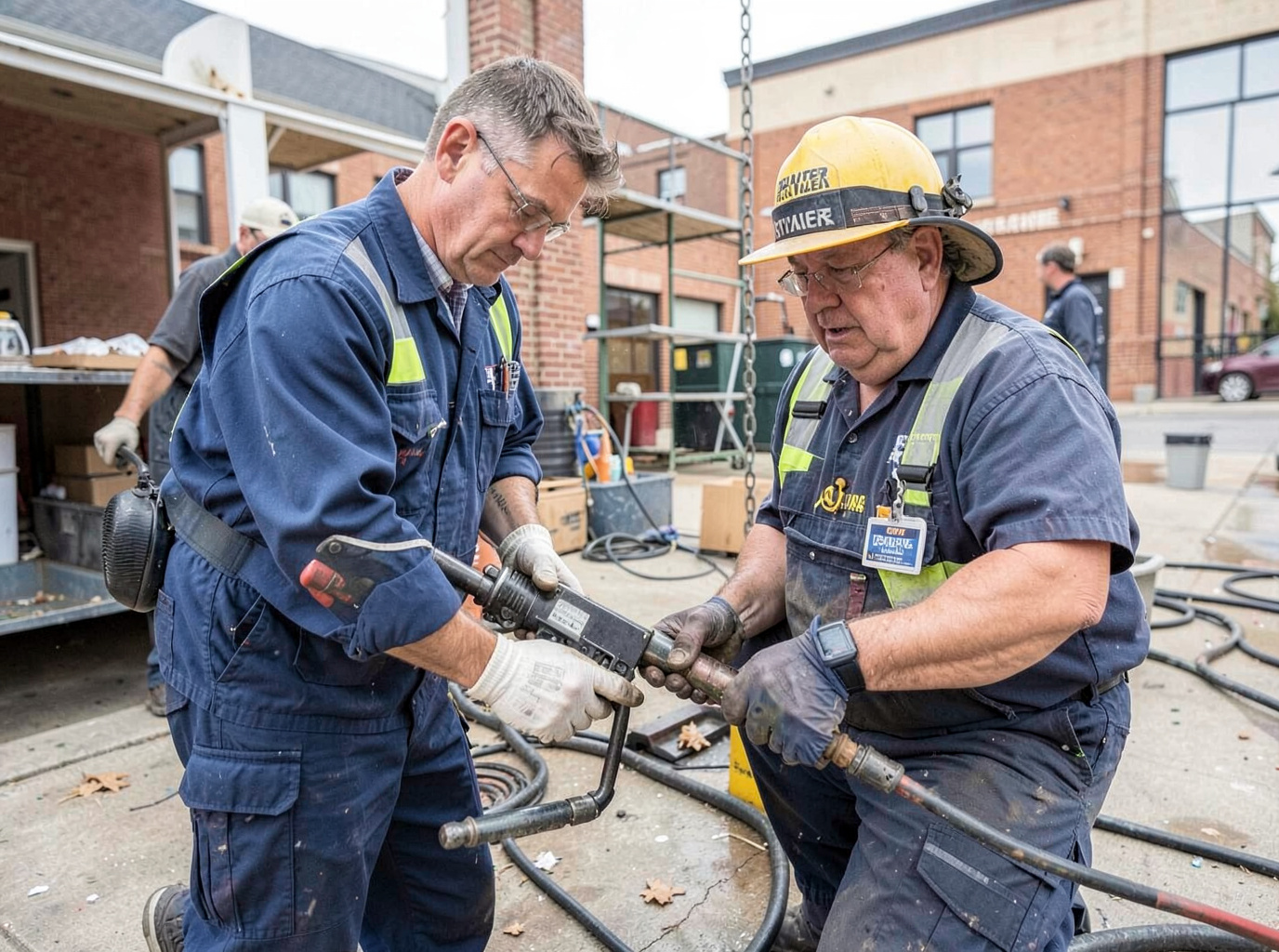
Charlotte's humid subtropical climate keeps moisture levels high even after mild winters, so any standing water left behind from a burst pipe or heavy rain quickly feeds mold growth inside older homes. In neighborhoods such as Dilworth and Plaza Midwood, many houses built before 1950 have crawl spaces and plaster walls that trap water against joists and lath, requiring extraction equipment that reaches behind finishes without unnecessary demolition. Technicians must also watch for hidden pockets around brick foundations common in Elizabeth and Myers Park, where clay-heavy soils in Mecklenburg County slow natural drainage and extend drying times.
Water extraction jobs in South End and Ballantyne often involve newer slab-on-grade construction where water migrates under tile or engineered flooring. High-volume pumps and moisture meters map saturation before air movers are placed, preventing warped subfloors that later show as cupping. Near landmarks like Freedom Park and the Spectrum Center, quick street access matters because equipment trucks need clear paths during weekday traffic. Extraction stops when readings drop below 15 percent moisture content on both wood and drywall to meet local code expectations for re-occupancy.
Storm-related extraction in NoDa and Mint Hill frequently follows roof leaks or window failures during summer thunderstorms. Crews use infrared cameras to locate water trails that travel along HVAC ducts common in ranch-style homes, then extract from multiple levels before humidity spikes again. Homeowners in Stallings and surrounding areas sometimes delay calling until carpets feel damp, which allows water to reach particleboard cabinets and force full replacement rather than simple drying.
Technician insight
In Charlotte the thing that catches most people out with water extraction is how fast humidity in the crawl spaces of pre-1960 homes in Dilworth and Plaza Midwood turns a small leak into widespread mold once summer temperatures hit. Clay soils around Mecklenburg County keep moisture trapped longer than homeowners expect, so skipping daily meter checks almost always means pulling more flooring later.
NoDa Bungalow After Summer Storm
Water entered through a roof valley and traveled along ductwork into the living room and hallway. Extraction removed several gallons from carpet and pad while air movers dried the plaster walls. Readings stayed elevated for three days due to the home's tight crawl space, but final verification confirmed safe levels without further demolition.
Water Extraction Services Services We Offer
✓Basement Water Extraction
Removes standing water from below-grade spaces common in older Dilworth and Elizabeth homes before it migrates into finished areas.
✓Carpet and Pad Extraction
Extracts water from wall-to-wall carpet and padding in Uptown and South End condos to stop mold from forming under baseboards.
✓Hardwood Floor Drying
Pulls moisture from tongue-and-groove floors in Myers Park and Plaza Midwood homes without sanding or refinishing when caught early.
✓Crawl Space Water Removal
Clears pooled water under houses in NoDa and Ballantyne where clay soils trap humidity and promote wood rot.
✓Appliance Leak Extraction
Extracts water from refrigerator, washer, or water-heater failures that spread across kitchens and laundry rooms in multi-story homes.
Water Extraction Services Cost in Charlotte, NC
| Service | Typical Range | What Affects It |
|---|---|---|
| Single-room carpet extraction | $250–$450 | Higher when padding must be removed and disposed. |
| Basement or crawl space extraction | $400–$800 | Depends on depth and access through older Charlotte foundations. |
| Multi-room or whole-home drying | $600–$1,200 | Driven by square footage and number of days equipment runs. |
| After-hours or weekend response | Add $150–$300 | Applies outside Mon–Fri 8am–6pm and Sat 9am–2pm. |
Ranges are typical for Charlotte, NC and confirmed with an exact written quote before any work starts.
How it works
- 1
Arrival And Assessment
Technicians arrive at the Charlotte address, locate the water source, and map affected rooms with moisture meters.
- 2
Standing Water Removal
High-capacity pumps and wands extract bulk water from floors, carpets, and low areas before it soaks deeper.
- 3
Hidden Moisture Extraction
Air movers and dehumidifiers pull remaining moisture from walls, subfloors, and crawl spaces while monitoring readings.
- 4
Final Drying Verification
Daily checks continue until moisture levels meet safe thresholds for the home's materials and local conditions.
Pricing
Prices vary by water volume, number of affected rooms, and how quickly extraction begins after the loss.