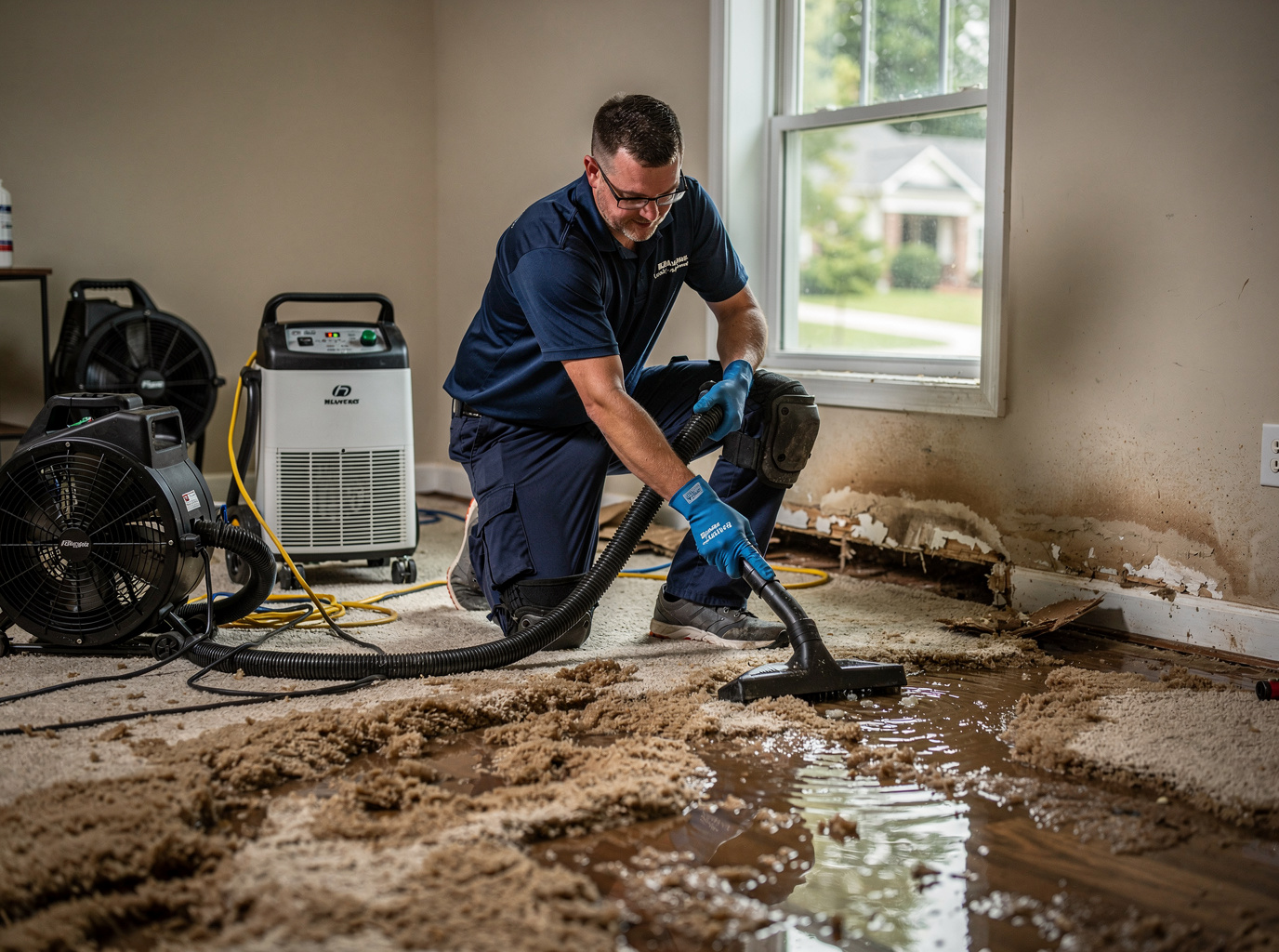
Charlotte’s humid subtropical climate keeps indoor moisture levels high from late spring through early fall, so standing water in a NoDa crawlspace or Plaza Midwood basement can turn into active mold growth within 48 hours. Older homes in Myers Park and Elizabeth often have plaster walls and heart-pine floors that trap moisture behind surfaces, requiring moisture meters and targeted drying rather than simple fans. Crews working out of 407 3rd St routinely map hidden water paths that travel along brick foundations common in Dilworth and Ballantyne before extraction begins.
Mecklenburg County stormwater patterns send runoff toward low-lying streets near Freedom Park and the rail lines in South End, so slab-on-grade homes there frequently see water migrate under cabinets and into subfloors. Technicians remove saturated insulation and padding the same day to prevent warping in engineered flooring, then use commercial dehumidifiers sized for the square footage rather than residential units that cannot keep up with local humidity. Properties near Mint Hill and Stallings with septic systems add an extra step of separating gray water from black water during extraction to meet county disposal rules.
Uptown high-rises and Spectrum Center-adjacent condos present different challenges: pressurized plumbing failures can push water into multiple units through shared walls and elevator shafts. Cleanup crews document every affected floor with photos and moisture logs before drying begins so property managers have records for insurance. Drying times stretch longer in summer because outside air brought in for ventilation already carries high moisture, so negative-air machines and desiccant dehumidifiers stay on site until readings drop below 12 percent on wood and 0.5 percent on concrete.
Technician insight
In Charlotte, the thing that catches most people out with Water Damage Cleanup is how fast the humidity turns a small leak into hidden mold behind plaster in 1920s Myers Park homes or under South End slab floors. Homeowners often run box fans and think it’s dry, but without commercial dehumidification the moisture just moves into the next wall cavity.
Dilworth Basement After Heavy Rain
Water entered a 1928 Dilworth home through a foundation crack during a summer storm and pooled under the finished basement floor. We mapped moisture traveling along the brick stem wall into the adjacent laundry room, extracted the water, and ran drying equipment for four days until readings stabilized. The homeowner avoided mold growth and insurance paid the claim with our daily logs.
Water Damage Cleanup Services We Offer
✓Emergency Water Extraction
Rapid removal of standing water from basements and slabs in South End and Dilworth before it reaches electrical systems or spreads to neighboring units.
✓Structural Drying for Older Homes
Moisture mapping and targeted drying of plaster and heart-pine floors in Myers Park and Elizabeth homes where modern equipment must work around historic materials.
✓Crawlspace Water Cleanup
Pumping and drying of NoDa and Plaza Midwood crawlspaces where high humidity accelerates mold on joists and insulation after heavy rain.
✓Sewage Backup Remediation
Safe extraction and disposal of contaminated water from properties near Freedom Park and Ballantyne where stormwater can overwhelm older sewer lines.
✓Post-Storm Interior Drying
Dehumidification and air movement after roof or window leaks in Uptown condos and townhomes near Bank of America Stadium during summer thunderstorms.
Water Damage Cleanup Cost in Charlotte, NC
| Service | Typical Range | What Affects It |
|---|---|---|
| Emergency extraction visit | $350–$750 | Varies with water depth and whether crawlspace or multi-story access is required. |
| Full structural drying package | $1,200–$2,800 | Includes equipment, monitoring, and disposal; higher in humid summer months. |
| Crawlspace or basement drying add-on | $600–$1,100 | Common in Dilworth and NoDa homes after heavy rain events. |
| Sewage-contaminated water handling | $800–$1,600 | Includes biohazard protocols and county-compliant disposal. |
Ranges are typical for Charlotte, NC and confirmed with an exact written quote before any work starts.
How it works
- 1
On-Site Assessment
Technicians arrive from the 3rd Street base, inspect all affected rooms with moisture meters, and identify hidden water paths common in Charlotte’s brick and slab construction.
- 2
Water Removal
Pumps and extraction wands pull standing water from floors and carpets while separating gray and black water for proper Mecklenburg County disposal.
- 3
Drying And Monitoring
Commercial dehumidifiers and air movers run until wood and concrete readings meet industry dry standards, with daily checks logged for insurance.
- 4
Final Clearance
Final moisture verification and removal of equipment once levels stabilize, leaving the property ready for repairs.
Pricing
Most Water Damage Cleanup jobs in Charlotte fall into a mid-range cost bracket depending on water volume, affected square footage, and whether hidden moisture in older walls or crawlspaces requires extra drying time.