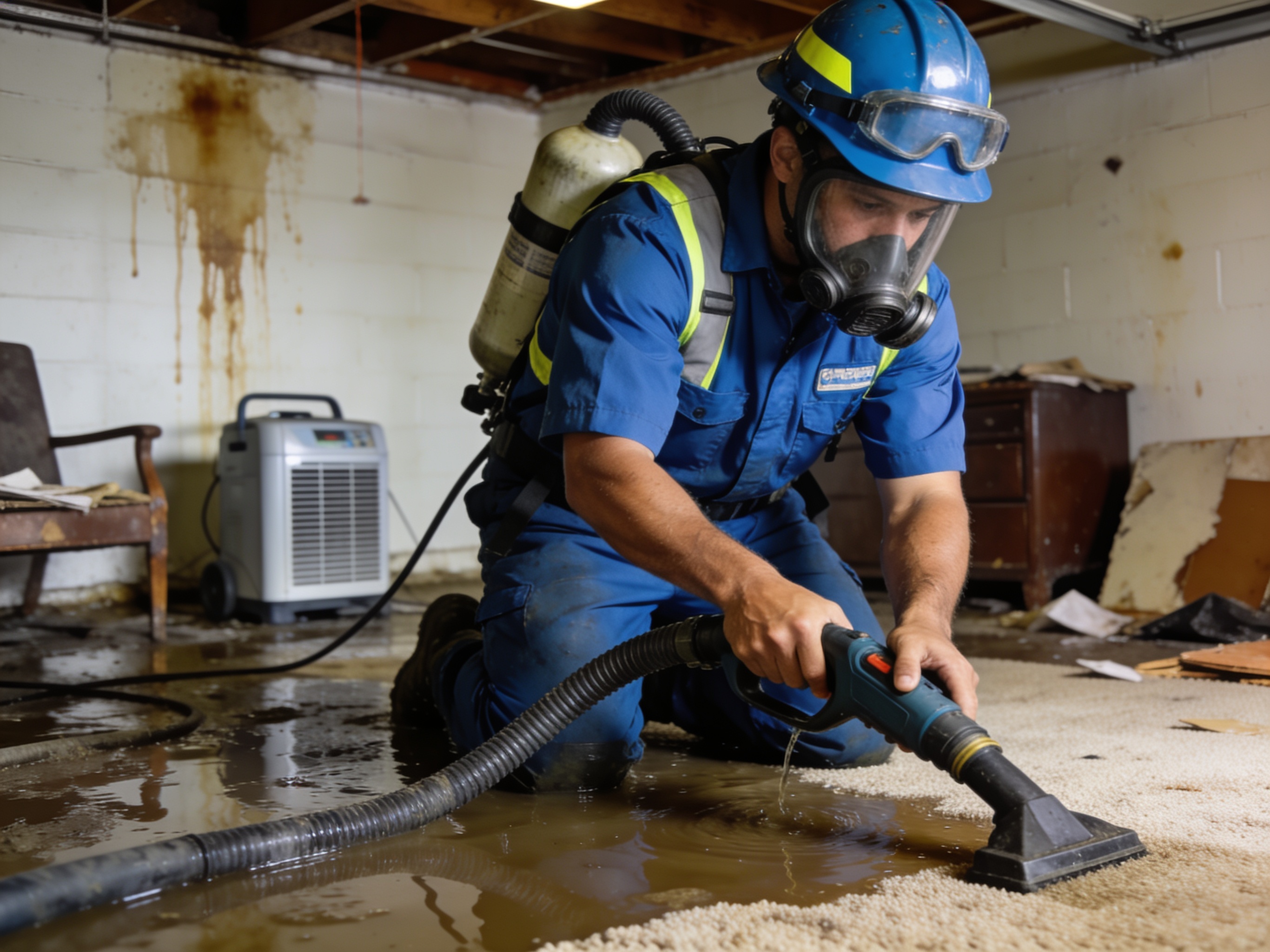
Charlotte’s humid subtropical climate brings intense summer storms that overwhelm storm drains in neighborhoods like South End and Plaza Midwood. Older brick homes in Dilworth and Myers Park often have crawl spaces or basements that trap water against clay-heavy soil, allowing moisture to wick into floor joists and plaster walls. Technicians must map hidden saturation with moisture meters because surface drying alone fails when humidity stays above 70 percent for days after a storm.
In Ballantyne and Elizabeth, newer slab-on-grade homes can still suffer when landscape grading directs runoff toward foundation vents. Flood water frequently carries silt from nearby creeks that clogs subfloor insulation and leaves behind staining that only shows after carpet removal. Restoration crews separate affected materials quickly because prolonged exposure in mild winters allows mold to colonize behind baseboards before homeowners notice musty odors.
Mecklenburg County building codes require permits for structural repairs after significant flooding, especially when load-bearing elements in NoDa’s converted mill buildings are involved. Technicians document every step with photos and readings so insurance adjusters accept the scope without repeated site visits. Work often continues into evenings during peak storm season because saturated drywall must be removed before it delaminates and spreads particulates through HVAC systems.
Technician insight
In Charlotte the thing that catches most people out with Flood Damage Restoration is how quickly humidity from the subtropical summers re-wets drywall and subfloors in older Dilworth and Plaza Midwood homes if dehumidifiers are pulled too soon after visible water is gone.
Storm Runoff Into NoDa Crawl Space
Heavy rain sent water under a 1920s bungalow in NoDa where grading sloped toward the foundation. Crews found saturated insulation and floor joists holding moisture days after the storm. They extracted water, dried the space over five days with continuous monitoring, then replaced damaged materials so the owners could avoid mold growth during the next humid stretch.
Flood Damage Restoration Services We Offer
✓Emergency Water Extraction
Rapid removal of standing water from basements and crawl spaces in Charlotte homes using truck-mounted pumps suited to Mecklenburg County’s clay soils.
✓Structural Drying and Dehumidification
Industrial air movers and low-grain dehumidifiers placed to pull moisture from plaster and hardwood floors common in Dilworth and Myers Park after summer storms.
✓Basement Flood Cleanup
Removal of silt and debris from below-grade spaces in older Uptown and Elizabeth properties where poor grading allows runoff to pool against foundations.
✓Content Cleaning and Restoration
Cleaning and drying of furniture, documents and textiles affected by flood water in South End lofts and NoDa residences before secondary damage sets in.
✓Mold Prevention After Flooding
Application of antimicrobial treatments and moisture barriers in humid Charlotte conditions to stop mold growth in wall cavities of Plaza Midwood homes.
Flood Damage Restoration Cost in Charlotte, NC
| Service | Typical Range | What Affects It |
|---|---|---|
| Initial Assessment And Extraction | $250–$650 | Higher when crawl space access is limited in Dilworth or Myers Park homes |
| Full Structural Drying | $800–$2,200 | Varies with number of rooms and length of humid weather after storms |
| Basement Cleanup | $600–$1,800 | Includes silt removal common after runoff from nearby streets in South End |
| Content Pack-Out And Cleaning | $400–$1,200 | Depends on quantity of textiles and documents in NoDa or Elizabeth properties |
Ranges are typical for Charlotte, NC and confirmed with an exact written quote before any work starts.
How it works
- 1
On-Site Assessment
Technician inspects affected areas in the home, uses moisture meters on walls and floors, and notes construction type typical to the neighborhood.
- 2
Water Removal
Standing water is extracted with pumps and wet vacuums while protecting nearby unaffected rooms in multi-story Charlotte properties.
- 3
Drying And Monitoring
Equipment is positioned and daily moisture readings are recorded until materials reach acceptable dryness levels for the local humidity.
- 4
Restoration And Repairs
Damaged drywall, flooring and insulation are replaced, followed by final cleaning before the space is returned to use.
Pricing
Costs depend on water volume, affected square footage, and whether older plaster or hardwood requires specialized drying in Charlotte homes.