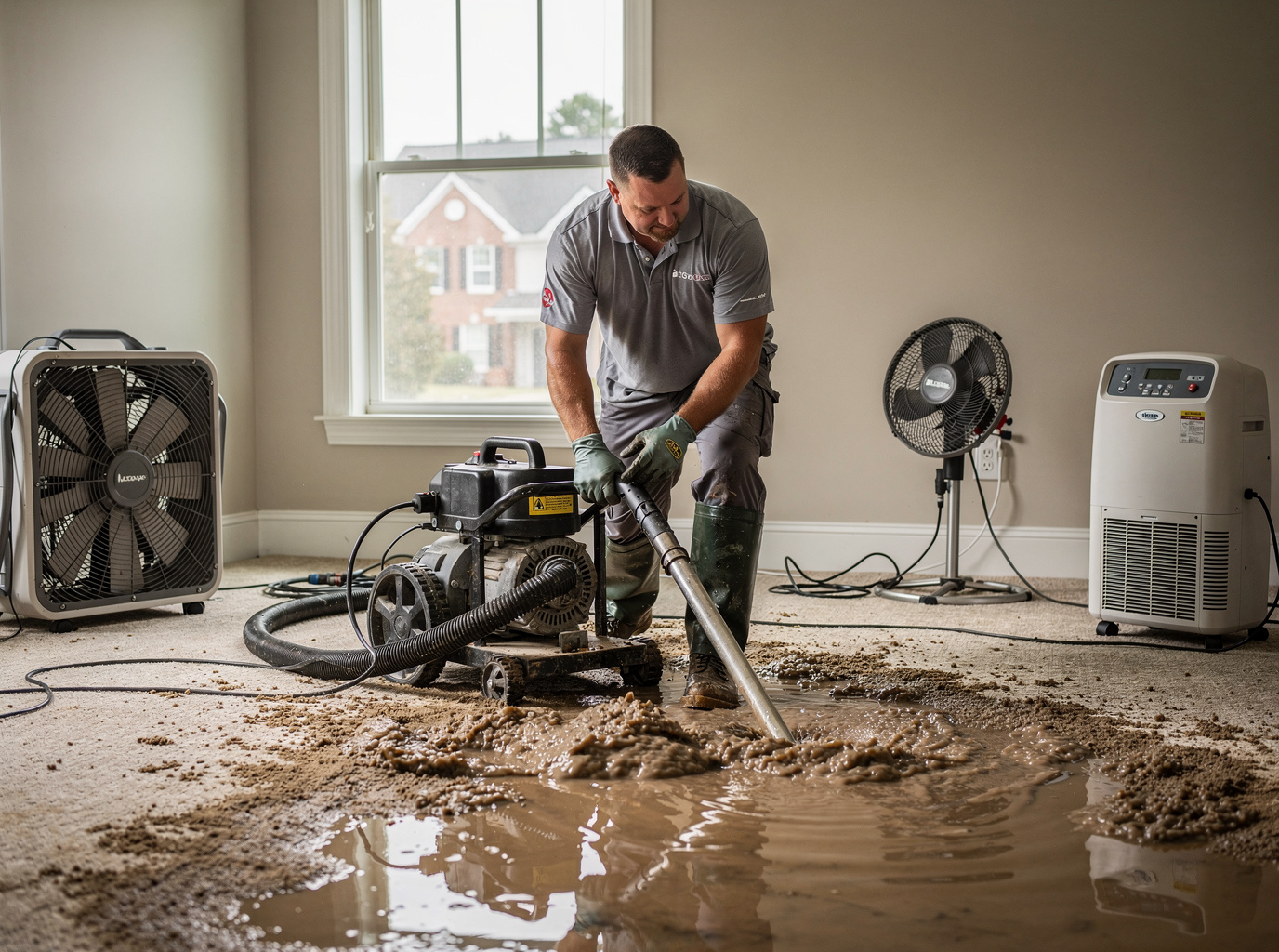
Charlotte’s humid subtropical climate means standing water in a Dilworth crawlspace or South End basement can turn into hidden mold within 48 hours once summer humidity spikes. Older brick and plaster homes in Plaza Midwood and Elizabeth often have lath-and-plaster walls that trap moisture behind the surface, so extraction alone is never enough. Technicians must pull baseboards, create negative pressure, and run commercial dehumidifiers calibrated for Mecklenburg County’s clay-heavy soil that sheds water slowly after heavy rains.
Uptown high-rises and NoDa loft conversions present different challenges: limited elevator access and shared HVAC systems can spread moisture to neighboring units if drying is not isolated quickly. Properties near Freedom Park and the Bechtler Museum area sit on older combined sewer lines that back up during intense thunderstorms, pushing contaminated water into finished lower levels. In these cases, we separate Category 3 water protocols from clean-water jobs and document moisture readings at multiple depths before any reconstruction begins.
Ballantyne and Myers Park homes built on sloped lots frequently experience groundwater intrusion through foundation walls after prolonged winter rains, even though winters are mild. We map drainage patterns around Bank of America Stadium and Spectrum Center event zones where street flooding can push water under garage slabs. Every job starts with a written scope that notes exact equipment placement and daily humidity logs so homeowners in Stallings or Mint Hill can see progress without surprises.
Technician insight
In Charlotte, the thing that catches most people out with 24/7 Water Damage Restoration is how fast our humid summers push moisture into lath-and-plaster walls in Dilworth and Plaza Midwood homes. Homeowners often stop at visible water and miss the hidden saturation behind baseboards that later grows mold once temperatures stay above 80 degrees.
Sewer Backup After Storm in South End
Heavy rain overwhelmed the combined line behind a 1920s duplex near Freedom Park. Water entered the finished basement and wicked into drywall. We extracted Category 3 water, placed drying equipment, and removed affected lower sections of wall while keeping upper living space isolated. Daily readings confirmed dry conditions within five days and the owners moved furniture back without further issues.
24/7 Water Damage Restoration Services We Offer
✓Emergency Water Extraction
Rapid removal of standing water from basements and crawlspaces in Uptown and Dilworth before humidity drives secondary damage.
✓Structural Drying and Dehumidification
Industrial drying setups tailored to Charlotte’s humid summers and older plaster walls in Plaza Midwood and Elizabeth.
✓Category 3 Water Cleanup
Contaminated water removal after sewer backups common near combined lines in South End and NoDa during storms.
✓Crawlspace Water Damage Repair
Moisture extraction and vapor barrier work for homes on clay soils in Ballantyne and Myers Park after heavy rain.
✓Appliance Leak Restoration
Targeted drying behind kitchens and laundry areas in high-rises near Spectrum Center where space is tight.
✓Storm and Flood Drying
Post-rain extraction and monitoring for properties near Freedom Park and Charlotte Motor Speedway affected by runoff.
24/7 Water Damage Restoration Cost in Charlotte, NC
| Service | Typical Range | What Affects It |
|---|---|---|
| Emergency Extraction | $600–$1,800 | Higher in older Uptown buildings with limited access |
| Full Structural Drying | $1,200–$3,500 | Varies with square footage and humidity load in summer |
| Category 3 Contaminated Cleanup | $2,000–$4,500 | Includes disposal and extra PPE for sewer backups |
| Crawlspace Drying | $800–$2,200 | Clay soil and low clearance increase time on site |
Ranges are typical for Charlotte, NC and confirmed with an exact written quote before any work starts.
How it works
- 1
On-Site Assessment
We arrive from our 3rd Street base, document moisture levels room by room, and note construction type common to the neighborhood.
- 2
Water Removal
Truck-mounted extraction pulls bulk water while we protect unaffected areas in multi-unit buildings.
- 3
Drying And Monitoring
Air movers and dehumidifiers run with daily readings until materials reach pre-loss moisture content.
- 4
Sanitizing And Final Walkthrough
Antimicrobial treatment where needed, then a walkthrough with the homeowner before equipment is removed.
Pricing
Upfront written estimates after inspection; final price depends on water volume, access, and drying duration.