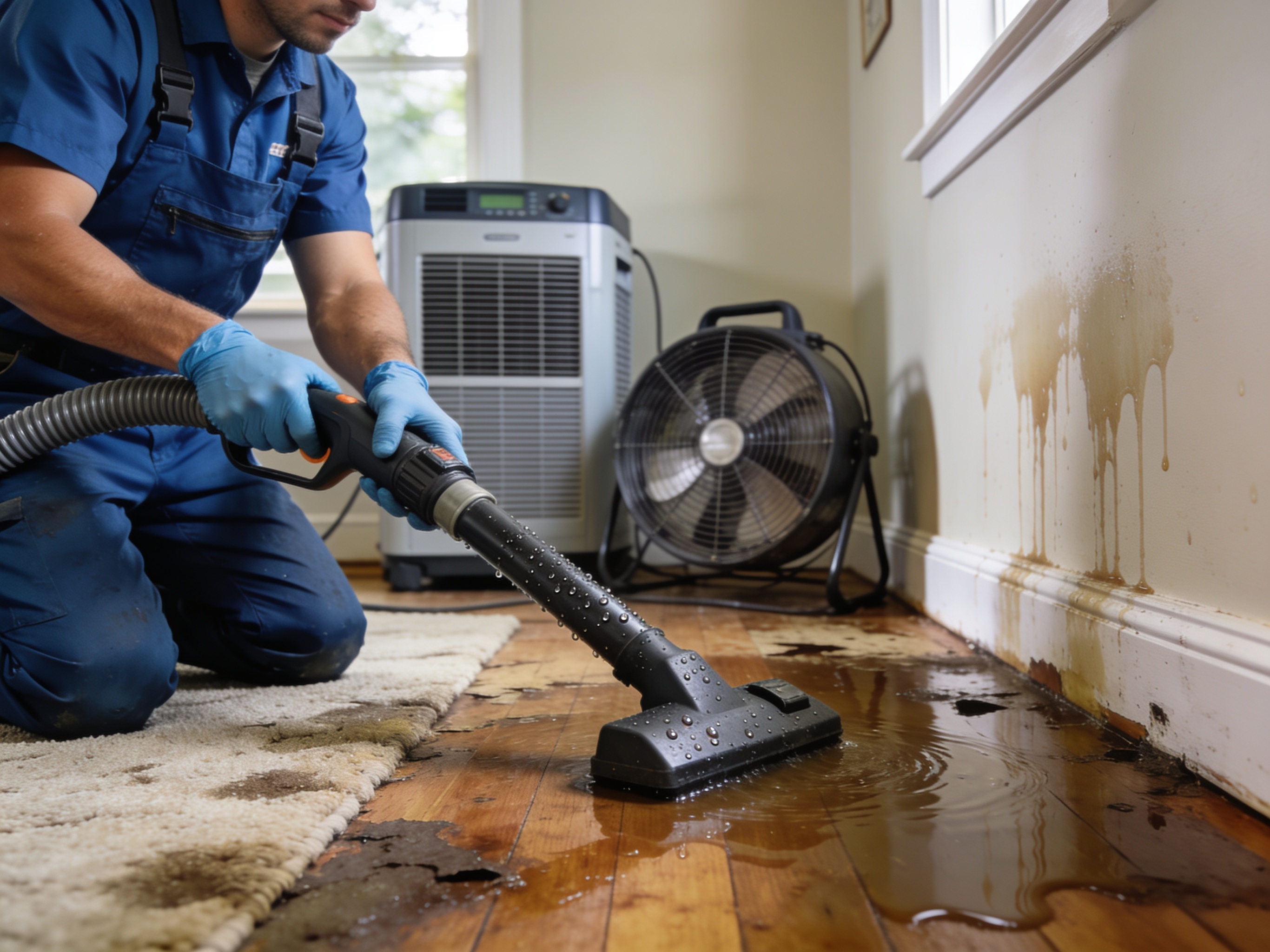
Charlotte’s humid subtropical climate brings sudden heavy rains that overwhelm older homes in Dilworth and Plaza Midwood, where plaster walls and knob-and-tube wiring trap moisture behind surfaces. In these neighborhoods, water from roof leaks or burst pipes travels along lath and plaster, reaching shared walls in duplexes and early 20th-century bungalows. Technicians must open cavities carefully to avoid disturbing original trim while using moisture meters to locate hidden saturation that standard fans miss.
Newer construction in Ballantyne and South End often uses engineered flooring and spray-foam insulation that holds water longer than traditional materials. When flooding reaches slab foundations common across Mecklenburg County, crews pull baseboards, create negative air pressure, and monitor relative humidity daily because residual moisture under luxury vinyl plank can trigger mold within 48 hours. Work near Bank of America Stadium or Spectrum Center requires quick containment to limit disruption to nearby commercial spaces.
Homes in Myers Park and Elizabeth sit on rolling terrain where stormwater pools against foundations during summer downpours. Restoration crews set up dehumidifiers sized for the square footage and run them until readings drop below 50 percent, then treat affected joists with antimicrobial solutions before reinstalling drywall. Properties near Mint Hill and Stallings sometimes involve crawl-space flooding that requires temporary shoring and vapor-barrier replacement to prevent recurring issues.
Local building codes require permits for structural repairs exceeding certain square footage, so crews document every step with photos and moisture logs before closing walls. This protects homeowners from future insurance disputes and ensures work meets Charlotte-Mecklenburg inspections.
Technician insight
In Charlotte the thing that catches most people out with water damage restoration is older plaster walls in Dilworth and Plaza Midwood homes. Moisture travels behind the lath and shows up days later in adjacent rooms if crews do not open enough cavities early. The humid summers make every extra day of drying count.
Crawl-Space Flooding In Elizabeth
Heavy rain pooled against a 1920s home foundation near Freedom Park. Standing water reached subfloor joists and insulation. Crews pumped the space, removed wet insulation, ran targeted drying, and installed a new vapor barrier. The homeowner avoided mold growth and structural softening.
Water Damage Restoration Services We Offer
✓Emergency Water Extraction
Rapid removal of standing water from basements and first floors in Uptown Charlotte and NoDa using truck-mounted pumps to limit secondary damage.
✓Structural Drying and Dehumidification
Placement of industrial air movers and dehumidifiers in homes across Dilworth and Myers Park until moisture readings reach safe levels.
✓Mold Remediation After Water Damage
Containment and removal of mold growth triggered by leaks in humid Mecklenburg County conditions, followed by HEPA cleaning and antimicrobial treatment.
✓Crawl Space Water Restoration
Pumping, drying and vapor-barrier replacement in properties near Freedom Park and Elizabeth where stormwater collects under older foundations.
✓Drywall and Insulation Replacement
Removal of saturated drywall and insulation in South End condos and Ballantyne homes, followed by code-compliant reinstallation.
Water Damage Restoration Cost in Charlotte, NC
| Service | Typical Range | What Affects It |
|---|---|---|
| Initial Assessment And Moisture Mapping | $150–$300 | Varies by square footage and number of rooms |
| Water Extraction | $400–$900 | Higher for multiple stories or heavy flooding |
| Equipment Drying Per Day | $200–$450 | Depends on dehumidifier size and days needed |
| Drywall Removal And Replacement | $800–$2,200 | Based on linear feet and finish level |
Ranges are typical for Charlotte, NC and confirmed with an exact written quote before any work starts.
How it works
- 1
On-Site Assessment
Technicians arrive from the 407 3rd St location, inspect affected rooms in the reported neighborhood, and document moisture levels with meters.
- 2
Water Removal
Pumps and extractors clear standing water from floors and carpets while protecting unaffected areas with plastic barriers.
- 3
Drying And Monitoring
Equipment runs continuously with daily visits to check humidity until all materials test dry, preventing hidden mold in Charlotte’s climate.
- 4
Restoration And Repairs
Replacement of damaged drywall, flooring and trim returns the space to pre-loss condition, with final walkthrough for the homeowner.
Pricing
Upfront quotes given after inspection; final cost depends on extent of water, materials affected, and drying time required.