Indian Trail homes sit on larger lots with clay-heavy soils that hold water after summer storms. When pipes burst or roofs leak during the humid subtropical rains, moisture travels under slabs and into crawl spaces faster than in older Charlotte neighborhoods. Our crew at 407 3rd St leaves Uptown by 8 a.m. and reaches Indian Trail addresses via US 74 in under 30 minutes most weekdays.
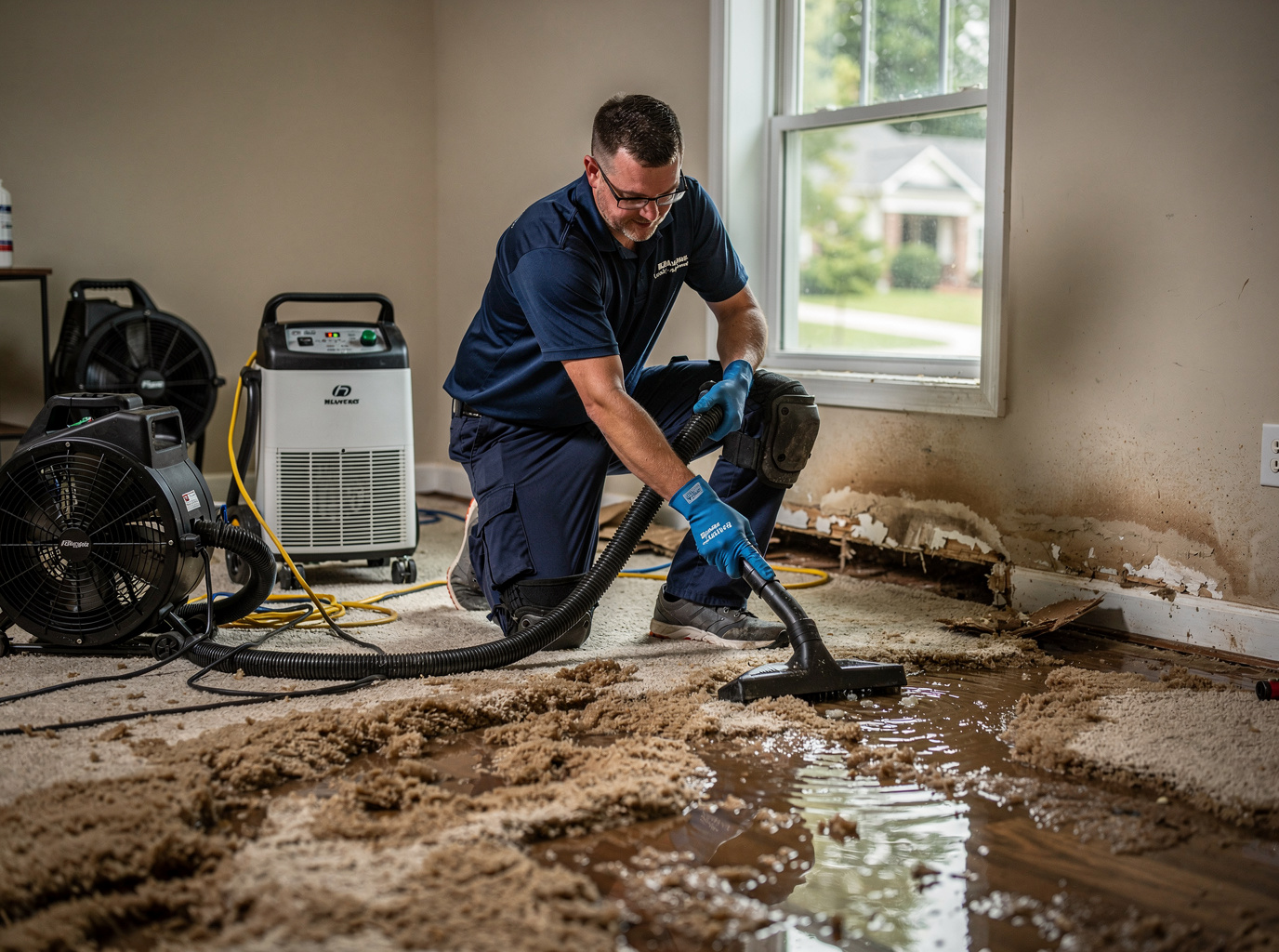
Many Indian Trail houses built since the late 1990s have vinyl siding and attached garages that channel water toward foundations when gutters overflow. We extract standing water, dry wall cavities with commercial air movers, and treat mold on oriented-strand board sheathing before it spreads into living areas. Saturday calls before 2 p.m. are handled the same day for residents along Matthews-Indian Trail Road.
Storm remnants and heavy downpours hit Union County harder than the city core because open fields funnel runoff into ditches along Stallings Road and Crooked Creek. Homeowners call us to set up containment barriers and monitor moisture meters until readings drop below 12 percent before any reconstruction begins.
Around 6. Indian Trail
We regularly work near:
- 📍Crooked Creek Park
- 📍Sun Valley High School
- 📍Indian Trail Recreation Center
- 📍US Highway 74
- 📍Matthews-Indian Trail Road
Water Damage Repair in 6. Indian Trail — Local Notes
- •Clay soils around Indian Trail slow natural drainage, so we often place extra drying equipment under slabs on grade homes near Crooked Creek Park.
- •Post-1990s construction uses OSB sheathing that absorbs water quickly; we check behind vinyl siding on every exterior leak call along US 74.
- •Larger lots mean longer hose runs and more dehumidifiers when we work on properties east of Sun Valley High School.
- •Flash flooding after afternoon thunderstorms commonly affects crawl spaces on Stallings Road; we schedule extraction before evening rush hour on I-485.